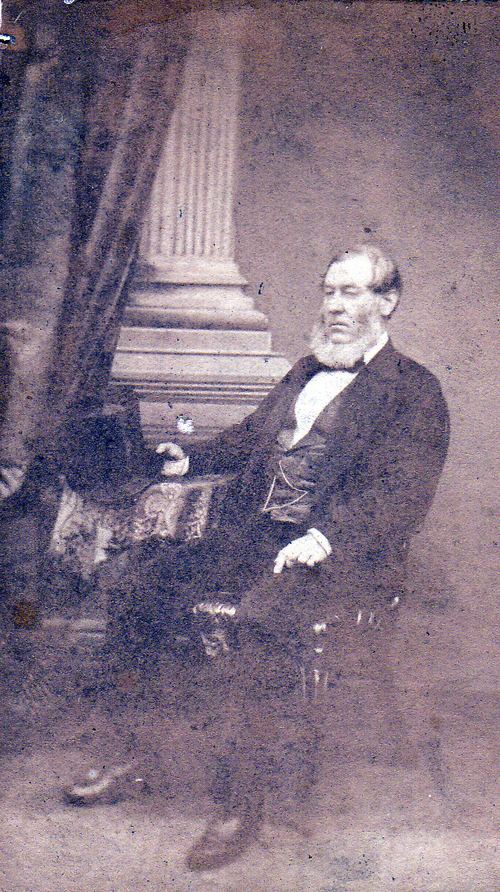
This is the city family behind the McCorkell shipping line, whose beginnings are told in Chapter III. Three generations of the family can be traced in Londonderry, and portraits survive of two of them.
- William McCorkell, innkeeper of the Bogsidec. 1721/28–1795
- William McCorkell m. Jane Corscaden, 17991772–1836
- Bartholomew McCorkell m. Frances Browne1805–1887
William the founder kept an inn in the Bogside in the 1770s and died there in 1795. His son William took over the Londonderry Journal with John Buchanan in 1796, and by 1809 had the paper to himself. In 1816 he lost a famous libel action brought against it by the Rev. Cornelius O'Mullan at Galway Assizes, with £2,500 damages. In 1797 he became the first McCorkell freeman of the city. By 1799 he was a grand juror for the city and county of Londonderry. Under William the Journal later moved from the Diamond to Shipquay Street and, unusually for a paper with its readership, came out in support of Catholic emancipation; its editor, William Wallen, resigned in protest in 1829 and helped to found the rival Londonderry Sentinel. Pigot's directory of 1824 lists him twice: as “printer & publisher of the Derry Journal” at the Diamond, and, as Wm. McCorkell & Co., among the city's merchants on Ship-quay, next to Robert Corscaden. He is the only William McCorkell in the directory, and the strongest evidence so far that the newspaper proprietor and the merchant were one man. His wife Jane, whom he had married at St Columb’s in 1799, died at Moville in July 1833 aged 53, and William himself died at his house on the Strand on Saturday 5 November 1836, aged 64. The Sentinel, founded in opposition to his paper, announced his death “with unfeigned sorrow”. That year the Journal passed to its editor, Edward Hyslop, and after Hyslop's death in 1851 it was owned for a time by Arthur McCorkell, very probably William's son the solicitor, with James Cruise. William and Jane’s eldest daughter Margaret died at Castlerock in 1861.
The printing house has left its own traces. From 1797 to 1800 the firm was Buchanan & M’Corkell, at 13 Diamond, and in the year of the rebellion it printed the Standing Orders for the Yeomanry Corps of Ireland issued at Dublin Castle on 15 May 1798; a copy is in the British Library. The Belfast News-Letter names “Mr. Buchanan, M’Corkell, printers, Derry” among the agents for Edward Bunting’s collection of the ancient music of Ireland in 1796, and in 1800 the firm was selling the Encyclopaedia Britannica. In 1804 “M’Corkel and Co., booksellers, London-Derry” subscribed to Edward Ledwich’s Antiquities of Ireland, and in 1810 and 1815 “Buchanan, M’Corkill” were the Derry agents for Dr Samuel Solomon’s popular Guide to Health. The corporation’s accounts of about 1813 include a payment to M’Corkell for advertising and for printing resolutions. Two issues of the Journal printed by “J Buchanan and Wm McCorkell”, for 24 and 31 January 1797, survive at PRONI. Customers were not always pleased with the editing: in 1812 General Hart, sending an address to be printed, insisted it go in “without a word or even a stop of it being altered (for he sometimes, I have been told, takes liberties of correcting)”. William later printed in his own name: the Rev. John Graham’s Derriana, a history of the siege of 1688–89, was “printed for the author by William M’Corkell, 13, Diamond” in 1823.
He had land in the county too. In 1813 he took a lease from the Marquis of Donegall of a farm of almost 60 acres at Elaghmore, which had been held by a Thomas Preston, and in 1824 he renewed it for three lives renewable for ever, at £33 10s a year; his son William later lived there as “William McCorkell of Elagh”. He was there in January 1839, when one of his servants, M’Cormick, was accused with another man of robbing a farmer on the Fahan road as he came home from Buncrana market. The police followed M’Cormick to Elagh but had no warrant, and “Mr. W. M’Corkell, of Elagh”, in whose service he had lived for a long time, promised that he would be forthcoming whenever he was wanted; M’Cormick ran off instead and was taken at Derry as he was about to sail for Scotland. On the night of 25 November 1814, in a winter of agrarian unrest in north Londonderry, “a draft bullock and a beef cow, the property of Mr. William M’Corkell of this city (Derry)”, and a cow of James Porter of Elagh, were houghed and maimed on the lands of Cumber; a later report tells of a second attack on his cattle.
Bartholomew was born in July 1805, the son of William McCorkell and Jane Corscaden, and was educated at Foyle College. He married Frances Browne, daughter of David Browne and Ann Kincaid, on 17 August 1843. He became a justice of the peace for County Donegal and for the city and county of Londonderry, Mayor of Londonderry, and in 1878 High Sheriff of County Londonderry. He died on 6 January 1887.
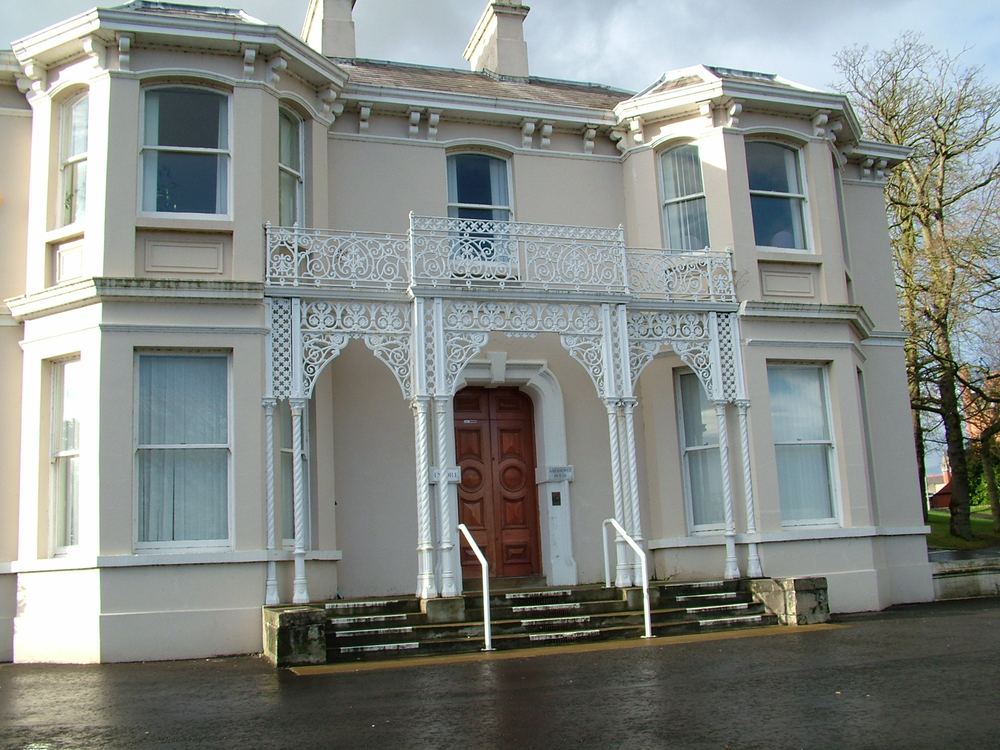
He and Frances had eight children: David Browne (1845–1897), Jane Augusta, Margaret Fitzgerald, William Foster, Annie Kincaid, Fannie Evelyn, Bartholomew Herbert (1852–1895) and Ada Langley. The Londonderry Sentinel records the birth of a son in October 1845 and of a daughter at the Strand in April 1848, and in December 1865 the death at Strand House of William Foster McCorkell, the second son, aged sixteen. The family later lived at Richmond, renamed Aberfoyle.
By the 1870s the family had become landowners as well as shipowners: Barry McCorkell of Londonderry, said locally to be of the shipping family, owned almost 1,000 acres in County Donegal.
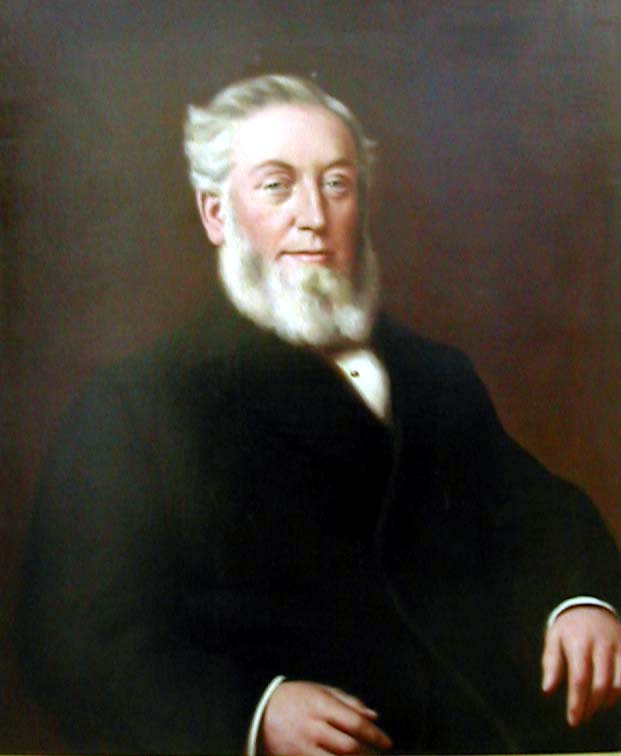
The family album
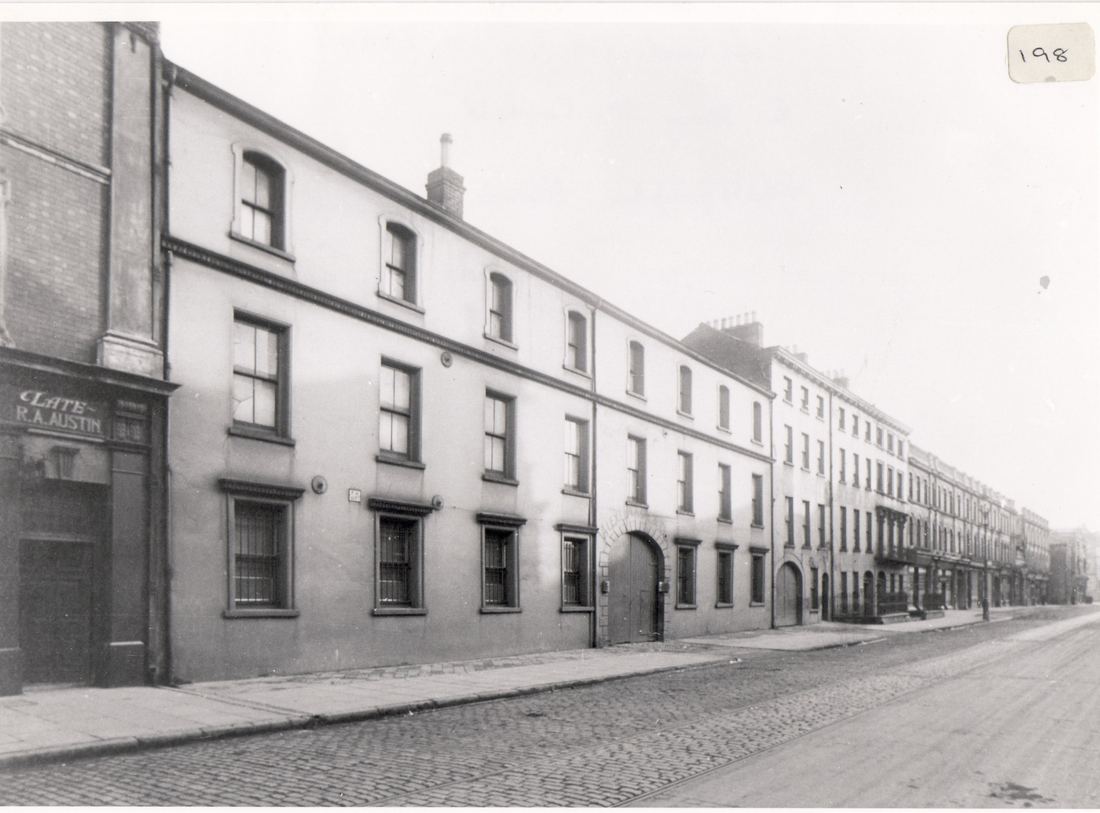
Photographs of the family and their buildings survive in the collection assembled by a researcher into the McCorkell Line. Arthur McCorkell, Esq., was a solicitor of Shipquay Street and later the Strand. The Sentinel records his children's births in 1846, 1848, 1852 and 1857, the death at Portballintrae in 1849 of his daughter Annie Mary Hay, aged sixteen months, and at Moville in 1860 of his eldest daughter Jane Davida, aged six. His wife Jane died in Shipquay Street in 1857, and Arthur died at the Strand on 12 September 1863.
The city family was larger than one line of descent. Archibald McCorkell, Esq., also a solicitor and a town councillor for the East Ward, of Foyle Street and Glengalliagh, died in 1854; a younger Archibald, also a town councillor, of Shipquay Street and Queen Street, had children born between 1856 and 1868. Thomas Moore McCorkell, Esq., of Baltimore, died in 1845 aged 27 at the house of George Foster on the Strand, "immediately after arriving in this City". Robert McCorkell, who died in 1857 aged 47, was manager of the printing department of the Derry Journal, the paper William the younger had once run. And in 1867 William, eldest son of "the late Captain McCorkell, of this City", died at St Louis.
My tree of the family now places most of them. The founder William married Margaret Gibson, who outlived him until 1807. Besides William the younger, their children included Eliza, who married James McColley; Margaret, who married William Gallagher and lived to 1875; and Archibald (1774–1829), the ship's captain. Captain Archibald married Elizabeth Moore and settled in America, and died in New York on 27 June 1829; he is "the late Captain McCorkell" of the 1867 notice. The shipping agency is older than the newspaper notices on this page suggest: a poster of June 1810 for passage to New York in the fast-sailing American ship Virginia asks applicants to apply to Wm McCorkell. Lloyd’s List finds a master named M’Corkle with the Superb, from Baltimore, in 1804, and with the Eliza, arriving at Philadelphia from Londonderry on 12 May 1812, very probably Archibald on both voyages; Lloyd’s Register of 1814 and 1815 also lists an A. M’Corkell as a master, and in February 1820 Archibald McCorkell signed the manifest of the Hesperus, which he commanded from Belfast to New York. His sons William, born in Cecil County, Maryland, in 1816, who died at St Louis, and Thomas Moore of Baltimore were the two who died far from home; a daughter, Margaret Gibson McCorkell, married William Baldwin Ostrom in New York in 1844. His youngest son, the younger Archibald, was born in New York on 7 November 1820, came back to Derry, became a town councillor and died at 13 Queen Street in 1897. Archibald the solicitor of Foyle Street and Glengalliagh (1803–1854) was a son of William the younger and Jane Corscaden; he married Mary Walker at Muff in 1835. An Archibald M’Corkell was one of the two sheriffs of the city, with Henry Darcus, in 1836 and again in 1837, and a burgess of the corporation; Captain Archibald was dead by then and the younger Archibald a boy, so the sheriff was very probably the solicitor. He was also solicitor to the Irish Society and, by 1848, deputy seneschal of Inishowen, holding a lease of the Society’s fishing rights; in March that year he signed a printed notice threatening to prosecute anyone who fished Lough Foyle between Magilligan Point and Lifford Bridge. The dispute came to trial at the Donegal assizes in July 1849 as Archibald M’Corkell and John Hill Rennie, lessees of the Irish Society, against the Marquis of Donegall. The Freeman’s Journal said that the case had been in the courts for many years and had kept much of Inishowen “in a state of constant turmoil”; the jury found for Archibald and Rennie, but gave them only sixpence damages and sixpence costs. He was still “the Seneschal” when he died in 1854. The Cooke passenger book of 1847–49 shows an “A. McCorkell Esq.” paying the passage of Isabella Irwin of Gallagh and her child to Philadelphia. Their brother William (c. 1807–1848), of Elagh Hall, married Lucy Caroline Armstrong at Strabane in 1841.
The family grave at St Columb's
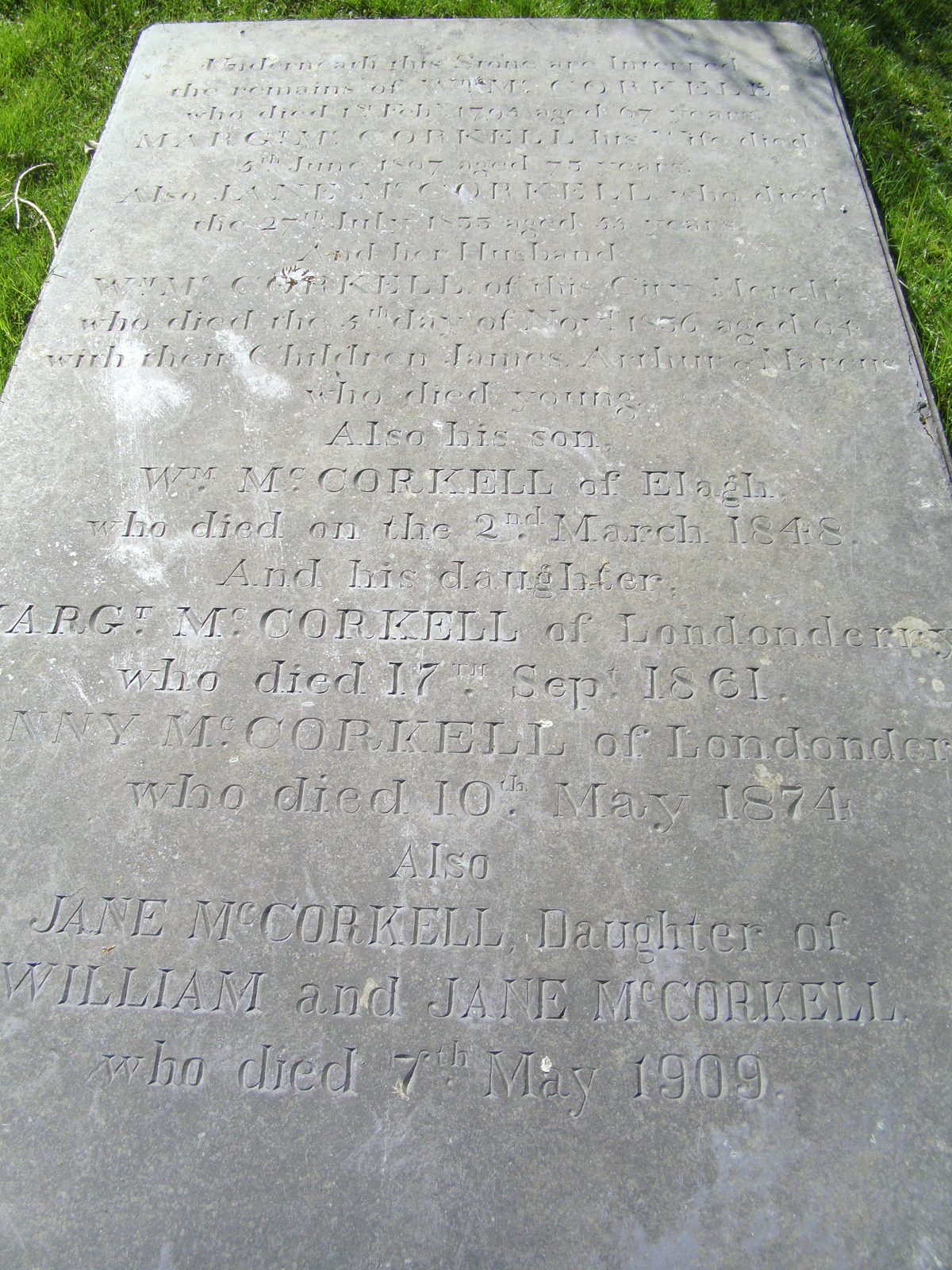
The founder and his descendants lie together under a single flat slab in the burying ground of St Columb's Cathedral. It reads:
Underneath this Stone are Interred the remains of Wm McCorkell who died 1st Feb 1795 aged 67 years. Margt McCorkell his Wife died 5th June 1807 aged 75 years. Also Jane McCorkell who died the 27th July 1833 aged 53 years. And her Husband Wm McCorkell of this City Merchant who died the 5th day of Novr 1836 aged 64, with their Children James, Arthur & Marcus who died young. Also his son Wm McCorkell of Elagh who died on the 2nd March 1848. And his daughter Margt McCorkell of Londonderry who died 17th Septr 1861. Fanny McCorkell of Londonderry who died 10th May 1874.Gravestone, St Columb's Cathedral, Londonderry
The stone confirms the outline of the family. William the founder and Margaret are the first couple; William the younger, the merchant of the Strand, and his wife Jane Corscaden are the second, and their son Arthur, the future solicitor, was baptised at First Derry Presbyterian Church on 20 May 1815, when the family lived on the Diamond; and William of Elagh and Margaret, who died at Castlerock in 1861, are their children. Three more of Jane's children, James, Arthur and Marcus, died young; the Arthur who became a solicitor must have been named after a brother who had died. The stone gives the founder's age as 67, so born about 1728, where the Belfast News-Letter notice of his death has him in his 74th year, born about 1721. Fanny, who died in 1874, was another daughter of William and Jane, born about 1819. A later inscription records a daughter who died in the twentieth century.
The family's church history follows their rise in the city. Robert and Mrs McCorkle subscribed to the new First Derry meeting-house in 1781, W. McCorkle gave to its fence fund in 1801, and Arthur was baptised there in 1815. Yet William had married Jane Corscaden ("Carseada" in the register) in St Columb's Cathedral in 1799. By long custom, still followed in mixed Protestant marriages today, a couple marries in the bride's church, so Jane was probably Church of Ireland: a Presbyterian husband, a Church of Ireland wife, and children baptised at First Derry. Burial at St Columb's says nothing about denomination, since until the City Cemetery opened in 1853 the cathedral burying ground served the whole walled city. But by the 1860s the daughters were marrying in the cathedral, Jane Augusta by the Bishop of Derry himself, and the family's attachment to St Columb's outlasted the century: the chapter house, built in 1910, was the family's gift, and a portrait of Jane McCorkell, née Corscaden, hangs there.
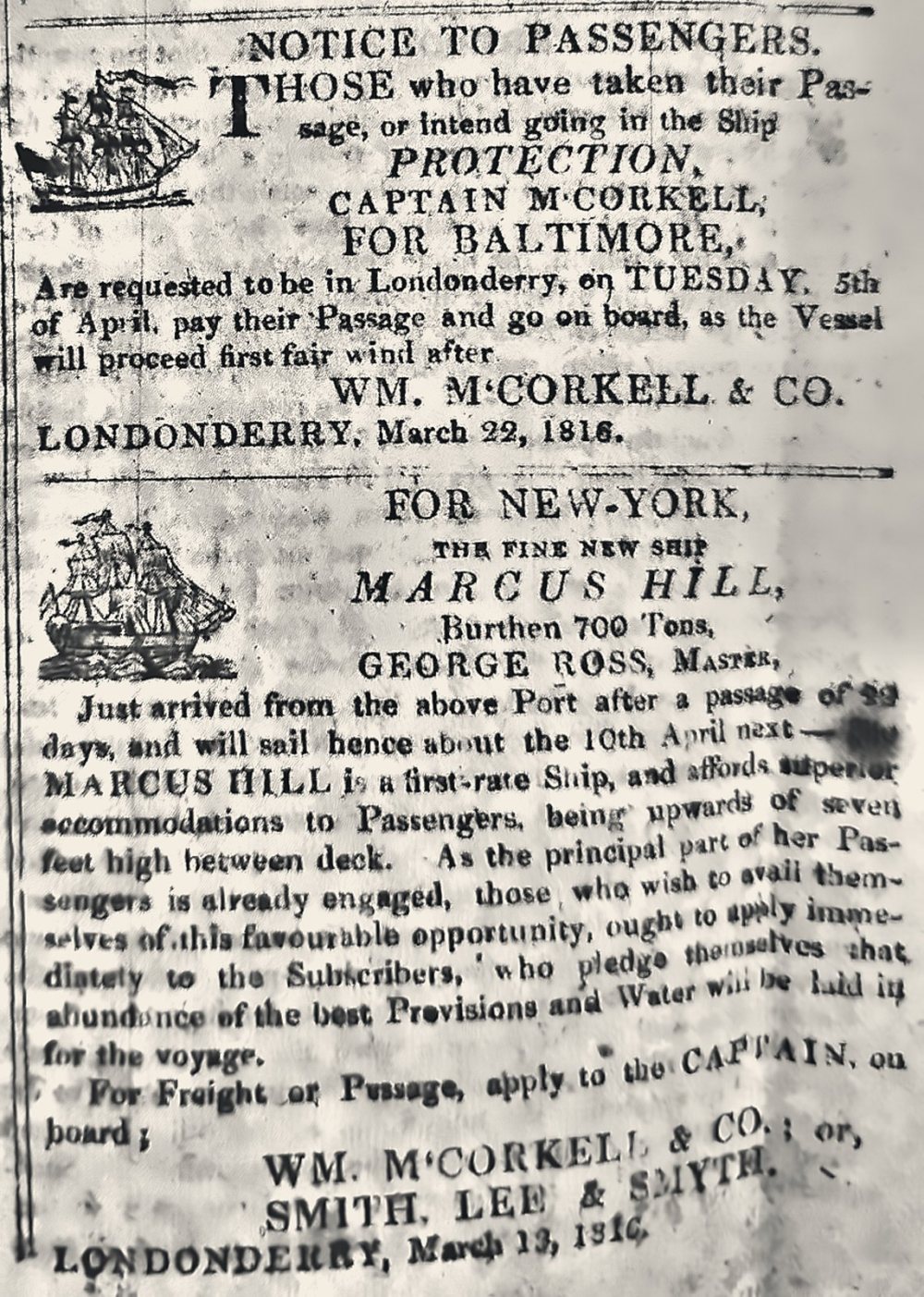
Into the twentieth century: Sir Dudley McCorkell
The family stayed at the centre of the city's life into the twentieth century. Bartholomew's eldest son, David Browne McCorkell (1845–1897), was a barrister and lived at Ballyarnett, just north of the city, near the Donegal border; he married Eveleen Georgina Harriett Pakenham at Omagh in 1882. Their eldest son, Dudley Evelyn Bruce McCorkell, was born at Ballyarnett on 22 February 1883 and educated at Shrewsbury and Pembroke College, Cambridge, where he played hockey, later playing for Wales. He inherited the farm at fourteen and farmed it for much of his life.
Dudley joined the family firm, William McCorkell & Co. Ltd, by then grain importers and millers, and soon became its chairman. He was High Sheriff of County Londonderry from 1925 for some twenty years, a member of the city council from 1925 to 1946, and Mayor of Londonderry from January 1929 to May 1935, a record term that made him an ex officio member of the Northern Ireland Senate. As mayor he welcomed Amelia Earhart when she landed near Derry in May 1932, the first woman to fly the Atlantic alone, and the next year Italo Balbo's Italian air armada on its way to Chicago. He went to the Ottawa trade conference of 1932 and spent much of his later career on farming bodies, chairing the pig industry council and the pigs marketing board, and sat on the boards of the Bank of Ireland, the Derry Gaslight Company and the County Donegal Railways. He was knighted in 1933 and became HM Lieutenant for the county in 1957. He married Helen Elizabeth Usher in 1909; their only son was killed in action in France in 1944. Sir Dudley died in Derry on 30 May 1960, and it was his obituary that recorded the family tradition of three brothers who “came to Londonderry about the year 1680” (Chapter VII).
Did the shipping family come from Burt?
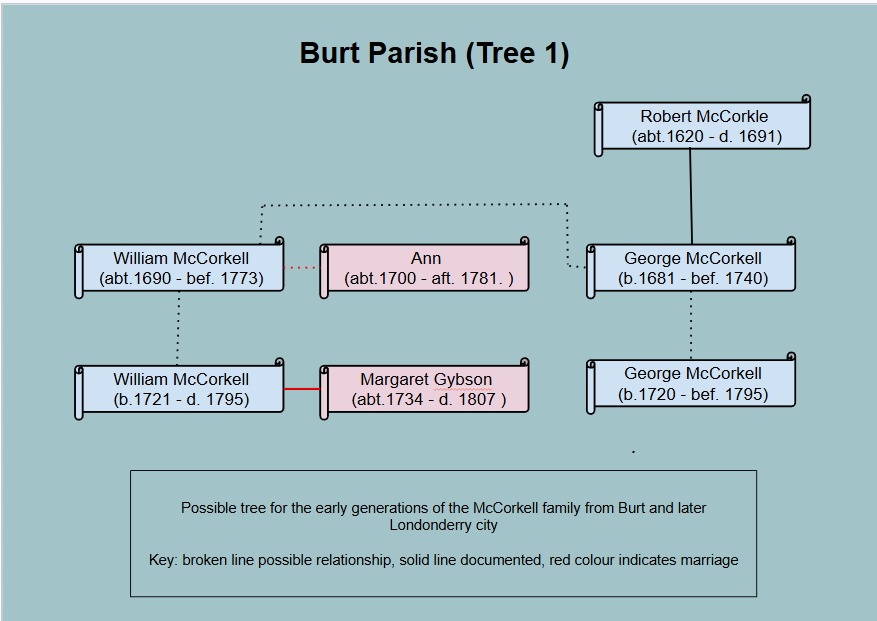
The founder's parents are unknown, but naming patterns suggest a link back to the Laggan, and to the McCorkells of Burt. Robert McKorkel's son George was baptised at Burt in 1681, and Robert is very probably the "Robert McCorkle, gent." of the Hill of Cullmactraine who left a will in 1691 (Chapter II). If the founder's father was a William born about 1690, he may have been George's younger brother. The chart below sets out this working theory. Only the solid lines are documented.
A new lead: Altaghaderry
A second possibility has come from the Registry of Deeds. In 1761 William and David McCorkle were registered as freeholders at Altaghaderry, in the parish of Killea, within five miles of the city (Chapter III). In the 1770s William the founder kept an inn in the Bogside. And on 30 January 1775 David McCorkell, innkeeper, of the City of Londonderry, witnessed a deed by which Mathew Grave of Montough, in the Liberties of the city, made over his interest to his son Walter Grave of Altaghaderry. A William and a David at Altaghaderry in 1761, and a William and a David keeping inns in the city a few years later, one of them witnessing a deed concerning Altaghaderry itself, are most simply explained as the same two men, probably brothers. The later McCorkells of Altaghaderry and Killea are described in a page of their own.
The freeholds matter too. A Donegal freeholder of the 1760s held his farm on a lease for lives worth at least forty shillings a year, which entitled him to vote in county elections. That set him well above the cottiers and yearly tenants who made up most of the countryside, and gave him an asset that could be sold or mortgaged: the kind of capital needed to take premises in the city and open an inn. Most McCorkells of the period held no such lease.
Other city records of the same years fit the picture. The Londonderry Journal places a David McCorkle near the Linen Hall in 1779, very probably the same man: an inn near the Hall would have served the country weavers and dealers who came in from the Laggan and Killea on market days. Robert Porter’s 1799 plan of the city shows the Linen Hall inside the walls, in the market quarter beside the Shambles, on what is still Linenhall Street; if that was the hall of 1779, David’s inn stood within the walls, while William’s was outside them in the Bogside, then only a thin fringe of houses below Butcher’s Gate. In 1773 the Journal lists a widow McCorkill in the Bogside alongside William the innkeeper, and in 1781 a Mrs Ann McCorkell, also of the Bogside. Ann was not William's wife, who was Margaret Gibson, and William was still holding a Bogside tenement in 1784, so she headed a separate household: perhaps David's wife or widow, or the widowed mother of the two men. Joseph McCorkle, who registered the Altaghaderry freehold in 1768, may be the Joseph McCorkle who married Margaret Correy at St Columb's in 1765.
This is a working theory, not a proven descent. William and David were common names, the 1775 deed calls David "of the City", and the freeholders of 1761 could equally be the innkeepers' father and uncle. Joseph McCorkle registered a freehold at Altaghaderry in 1768, so more than one of the family held land there. Nor does it rule out Burt: Killea borders the Laggan, and the Burt families could still be the generation before. A deed by which William or David sold or mortgaged their Altaghaderry lease, or a will naming them both, would settle it.
Some links are now clear. Arthur the solicitor, baptised at First Derry in 1815 as a son of William and Jane, was Bartholomew's brother. Arthur married Jane Gilmour at First Derry in 1845. The younger Archibald married Elizabeth Chambers Magee at Warrenpoint in 1855; their sons included Ostrom Moore McCorkell, born in 1867, who emigrated to Philadelphia in 1883, and Charles Alfred, born in 1868. In the next generation Bartholomew's sons David Browne and Bartholomew Herbert married Eveleen Pakenham (1882) and Harriet Hamilton (1894), and Arthur's daughter Annette Minnie McCorkell married James Corscaden in 1881, renewing the old family tie. Arthur's sons Arthur and Louis both married daughters of the Griffith family in New South Wales, Louis at Broken Hill in 1890, and their children were born at Parkes and Broken Hill.
More from the Registry of Deeds
A search of the machine-read transcripts of the Registry of Deeds adds several dates to this outline. In October 1764 a mortgage of two tenements outside Butcher’s Gate, in the suburbs of the city, names William McCorkell as one of the occupiers, so William was in the Bogside by then. On 3 August 1767 “William McCorkel of the Suburbs of said City of Londonderry, Inn keeper” witnessed the sale of the half quarterland of Lower Cooly, in Upper Moville, by George Dougherty of Tullagh, in Clonmany parish, to William McKean, a Derry merchant, for £450. The land was then in the possession of Dougherty “and his Under tenants”, on a lease with thirteen years to run. William swore to the memorial in Londonderry on 6 August and signed it “Willm McCorkel”. That is five years before the first newspaper notice of his inn.
Another member of the family appears in 1779. On 5 February that year Mathew McCorkell, of the suburbs of the City of Londonderry, distiller, mortgaged a house and garden in the suburbs, held on a lease for three lives, to Stephen Taylor of Burt, farmer, for £26 16s. Mathew is not otherwise known and his place in the family is uncertain, but a link with a Burt farmer is worth noting, given the question of a Burt origin.
In the next generation the deeds follow William the younger as a merchant and property owner. On 27 July 1816 Peter Benson Ormsby sold William McCorkle, merchant, the house numbered 1 on the south side of Shipquay Street, 36 feet wide and running back 121 feet to Rosemary Lane; it may well have been the premises to which the Journal moved. In 1817 and again in 1827 he held a warehouse in the new block of houses and stores on the Ship Quay built by Joseph Young and called Waterloo Place, and in 1832 he registered as a freeholder of Strand Road and near Waterloo Place. In 1820 a farm in the quarterland of Cloghmore, in the Inishowen part of Templemore parish, was reconveyed to him free of a mortgage of 1799 for £350. And in 1826 a lease by the Marquis of Donegall of land in Inishowen named as one of its three lives “Arthur McCorkle son of William McCorkle”, surely Arthur the solicitor, then about eleven.
The family also appears in the courts. Between 1813 and 1822 William was one of three assignees, with John Ross and William Lockey, of the bankrupts James and Michael Ross, and the bankruptcy produced a run of suits in Chancery; in 1825 he was sued in Chancery with George Foster and James Gregg. Earlier, in 1765, the Honourable The Irish Society, the London owners of the city, brought a suit in the Court of Exchequer against a Robert McCorkle.
These readings come from machine transcriptions of the deed memorials and from the courts’ bill books, which record only the parties and dates. The names are clear, but some place names and sums still need checking against the original images.
The full story of the shipping line and its ships will follow in a chapter of its own. Meanwhile, the Wikipedia article on the McCorkell Line gives a good account of the ships, among them the Mohongo and the Minnehaha, the "Green Yacht from Derry", and of the line's end in 1897. The records of the Glasgow shipbuilders add another: the iron sailing barque Nokomis, ship no. 192 of the Linthouse yard of Alexander Stephen and Sons, was built in 1875 for “Messrs W McCorkell and Co, Londonderry”. Its account of the family's origins repeats the three-brothers story and gives 1728 for the founder's birth. That year agrees with his gravestone, though not with his death notice; but the records in this study point to a family already long settled in the north-west, not newly arrived (see Chapter VII).
Open questions
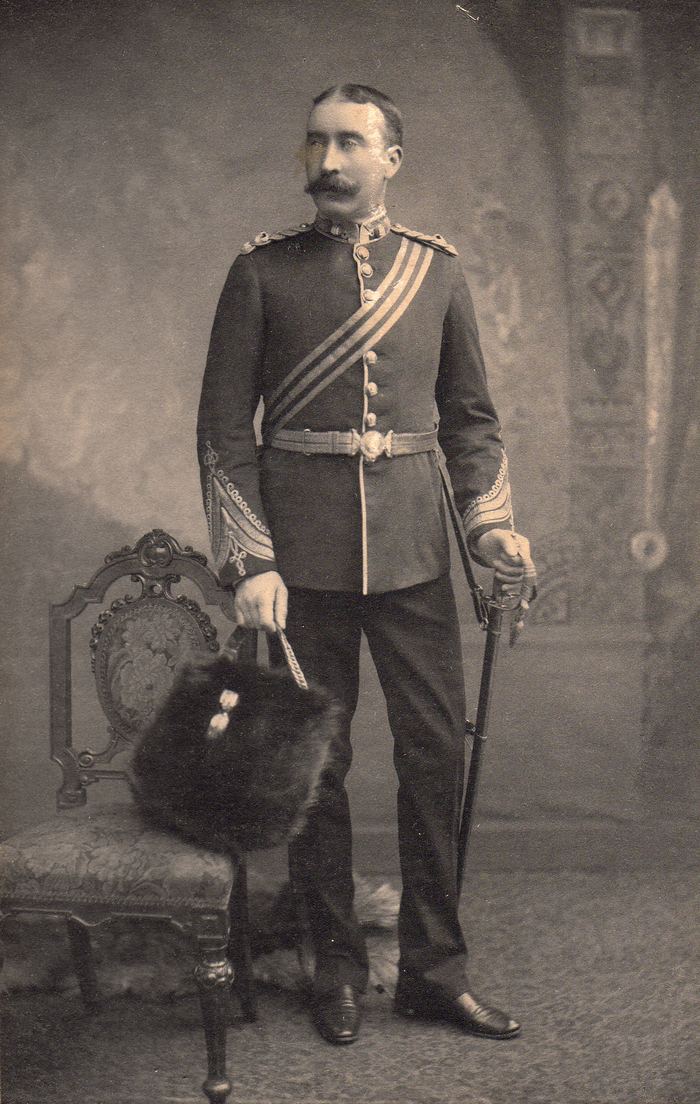
- Who was Major Henry James McCorkell, whose photograph survives in the shipping family's album?
- Was the founder born about 1721, as his death notice implies, or about 1728, as his gravestone says?
- Did the shipping family come from Altaghaderry, in Killea, or from the Burt families? Were the founder William and David McCorkell, innkeeper in 1775, the William and David who were freeholders at Altaghaderry in 1761? Both the chart and the Altaghaderry lead are working theories only.
Sources
- PRONI: Londonderry Journal issues D796/3–4; Donegall leases D652/770 and D652/879; D2892/4/1 (the Virginia poster, 1810); D3077/B/8/16 (Hart letter, 1812); Donegall papers D1798/6 and D1798/12/18 (Lough Foyle fishery and the seneschal); Corscaden papers D4174.
- Ulster Ancestry free pages (now offline; archived copy): passenger list of the Hesperus, 1820, and the J. & J. Cooke passenger book transcriptions.
- Imprints: Journal of the Society for Army Historical Research, vols 3–4 (1924–25), list of standing orders; A Catalogue of the Bradshaw Collection of Irish Books, Cambridge University Library (1916), Londonderry printers; Ledwich, Antiquities of Ireland (1804) and Solomon, Guide to Health (1810, 1815), subscriber and agent lists.
- The Protestant Advocate, vol. 3 (March 1815), pp. 274 and 278, quoting the Belfast News-Letter; Lloyd’s List, 1804 and 1812; Belfast News-Letter, 1796 and 1800 (Belfast News-Letter Index, 1737–1800); Robert Simpson, The Annals of Derry (1847), list of sheriffs; Appendix to the First Report of the Commissioners on Municipal Corporations in Ireland (1835).
- Gerry McElroy, “McCorkell, Sir Dudley Evelyn Bruce”, Dictionary of Irish Biography (2009), doi.org/10.3318/dib.005615.v1.
- Londonderry Sentinel family notices, 1835–1869, transcribed by Len Swindley (cotyroneireland.com).
- Pigot & Co., City of Dublin and Hibernian Provincial Directory (1824), Londonderry, p. 399.
- “Derry Journal 250: banned north and south, the eventful story of Ireland’s second oldest newspaper”, Derry Journal, 28 May 2022; John Hempton, The Siege and History of Londonderry (1861).
- Belfast News-Letter, February 1795; St Columb's Cathedral registers and gravestone; First Derry Presbyterian register.
- Burke's Irish Family Records (1976), p. 173, and Burke's Landed Gentry of Ireland, 4th ed. (1958), p. 459, as given on thepeerage.com.
- McCorkell estate, Landed Estates Database, University of Galway; Return of Owners of Land (1876).
- Wikipedia, McCorkell Line.
- Transcripts of memorials of deeds, conveyances and wills, Registry of Deeds, Dublin: Deeds 1767–1769, 1779–1782, 1816, 1817, 1820, 1826 and 1827 (FamilySearch full-text collection); Chancery and Exchequer bill books, Ireland, Court of Chancery Records, 1633–1851 and Ireland, Exchequer Court of Equity Bill Books, 1674–1850 (Ancestry); Freeholders’ registers, 1832 (PRONI).
- Transcripts of memorials of deeds, conveyances and wills, Registry of Deeds, Dublin: Deeds 1774–1775, memorial of a deed of 30 January 1775 (FamilySearch full-text collection).
- Londonderry Journal, advertisements of 13 and 22 March 1816.
- Belfast News-Letter, 8 Feb 1839 (from the Derry Sentinel); Freeman’s Journal, 27 Jul 1849 (Newspapers.com).