McCorkle, MacCorkle, McCorkell and McCorkill are one Ulster name. Surnames were not fixed in spelling until the late nineteenth century. Clerks and ministers wrote names as they heard them, most tenants could not read or write, and families settled on different spellings in different places. The Donegal and Londonderry families kept McCorkell, while many of their American cousins became McCorkle or MacCorkle. This site began with the Irish families, but a large part of its readers, and of the people who write to me, are American descendants.
Even the sound differs. In Donegal and Derry the name is said “Mack-CORK-ill”; in much of America it has become “Muck-COR-kull”.
Where they came from
Most McCorkles in colonial America were probably Ulster Presbyterians, descended from Lowland Scots who had settled in the north-west of Ireland after 1610. The Scots had arrived from Ayrshire and the Clyde with the Plantation (Chapter II), and the name is first recorded in Ayrshire in 1528 (Chapter I). It is not a Highland clan name in Ulster, whatever family tradition may say: the Y-DNA of tested McCorkles falls among Lowland and Border Scots, not among the Highland families that share the Norse root of the name (Chapter VI).
The first great emigration of Ulster Presbyterians came in 1718, when one group left the Bann valley and founded Londonderry, New Hampshire, and another left the Laggan, where Burt Presbyterian church stands, for Casco Bay in Maine. McCorkells followed in the 1720s and in every decade after. Philadelphia appears to have been the family’s favourite port of entry, and the usual pattern was to settle first in Pennsylvania and then move south down the Valley of Virginia into the Carolinas and on to Tennessee and Kentucky. The reasons for leaving, and what the records show, are in Chapter IV.
Many American family histories say the emigrant was born in Scotland and stayed only a short while in Ireland, often “with an uncle”, before sailing. The name the emigrants gave themselves argues against it. Nobody adds a country to their identity for passing through it: families called themselves Scotch-Irish because they had lived in Ulster for generations and remembered that their roots were in Scotland. The McCorkells were in the Laggan by 1630, and the Y-DNA match between Donegal and the Carolinas, described below, points the same way. In the Revolution the difference still counted. The Highland Scots who had come straight from Scotland to eastern North Carolina mostly stayed loyal to the king, while the Scotch-Irish of Mecklenburg were for independence, and one McCorkle’s pension declaration records that he fought against the Highlanders.
The first records in America
Almost every early McCorkle story in America rests on family tradition. The surviving records begin later than the traditions, and they are thin:
| Year | Record | Place |
|---|---|---|
| 1737–38 | Land warrants name Samuel Corkle, with a Samuel McHurkle as a neighbour, the earliest primary record of the name in Pennsylvania | Paxtang district, Lancaster Co., Pennsylvania |
| 1746–48 | Matthew McKorkell (1746) and John McCorkle (1746–48) subscribe to the support of the Rev. Adam Boyd | Brandywine Manor, Chester Co., Pennsylvania |
| 1747, 1749 | Deeds for the farms of James McCorkle (1747) and Robert McCorkle (1749); Samuel McCorkle is a landowner there by 1749 | Beverley Manor, Augusta Co., Virginia |
| c. 1765 | John McCorkle moves from Pennsylvania to the Catawba country | Mecklenburg Co., North Carolina |
| 1767 | James McCorkle witnesses a deed, his first record in Virginia | Augusta Co., Virginia |
| 1788 | Death of Samuel McCorkle, who had married Sarah about 1752 | Augusta Co., Virginia |
| 1794 | Will of James McCorkle, sheriff of Montgomery County in 1778, leaving his estate to the daughters of his late brother William | Montgomery Co., Virginia |
The settlers of the 1730s took the usual Ulster road: in at Philadelphia, west to the Susquehanna, and then, from the late 1730s, south up the Great Wagon Road into the Valley of Virginia, where Beverley Manor and the Borden grant took in hundreds of Ulster families. Spelling meant little to them. The same men appear as Corkle, McHurkle, McKorkell and McCorkle within a few years, just as their cousins in Donegal appear as McCorkill, McCorkhill and McCorkell.
The surnames in the kirk session book of Burt, in the Laggan, for 1676–1715 read like a roll of the first settlers of Augusta and Rockbridge counties, McCorkells among them, and the book closes just before the emigration of 1718. It does not prove a single family link, but the place, the church, the period and the names all fit (Chapter II).
James and William McCorkle, and Cloughfin
One American family can be set beside a record in Ireland. James McCorkle is said to have come from Ulster about 1770; his first record in Virginia is as a deed witness in Augusta County in January 1767. He became a merchant, a militia captain and a justice, sheriff of Montgomery County in 1778, and a trustee of Liberty Hall Academy, which became Washington and Lee University. He was a business partner of William Christian, whose father Israel Christian, born of a Manx family, had lived in Londonderry before emigrating about 1740. James was never married. He died in 1794, and his will left his estate, including a thousand acres on the Green River in Kentucky, to the daughters of his late brother William.
William’s widow was Martha. Their daughters were Margaret, born in Ireland about 1772, who married William Adams in Montgomery County in 1793; Rebecca, born in Ireland about 1780, who married Andrew Thompson there in 1801; and Martha, who married Samuel Compton in Green County, Kentucky, in 1810. A Samuel McCorkle of Green County, whose estate was administered in 1797, was probably a third brother. So William had come to America with his family some time after about 1780.
In May 1783 the Abercorn agent at Strabane wrote of William McCorkill of Cloughfin, in the parish of Clonleigh, who had sold his farm as young men of the district were leaving for America, though the agent doubted he would go, “as he is an elderly man” (Chapter III). He may be William the brother of James. The dates fit, and the McCorkills of Cloughfin and Strabane were the nearest family of the name to the Foyle ports. But no record names William’s townland, and the agent’s “elderly” sits awkwardly with a daughter born about 1780. The family left no sons, so no Y-DNA can test it.
Inishowen links
Nothing yet proves that any colonial McCorkle came from Inishowen, but several threads lead there, and they are set out here as they have been stated, for others to test.
Piney Creek and Fahan. Descendants of the McCorkles of Piney Creek, near Taneytown, Maryland, report that a John McCorkle was a trustee of the land on which the Piney Creek Presbyterian church was built about 1760. The church’s minister from about 1772 was the Rev. Joseph Rhea (1715–1777), who had been minister at Fahan, on Lough Swilly in Inishowen, and is said to have emigrated with his family in 1769. Several families of the congregation are said to have come from the Raphoe district, and a Mary “Hannah” McCorkle married John Scott, said to have been born in Raphoe. After Rhea’s death his son John led part of the congregation over the mountains to what is now Sullivan County, Tennessee, and family tradition puts three McCorkles, Samuel, Joseph and John, in the party. The Tennessee McCorkles who descend from them include, probably, the line of John McCorkle (1789–1881) whose Y-DNA is described below. A family account written in the 1930s names a Matthew McCorkle, who came from Ireland about 1735, as father of them all, which fits the Matthew McKorkell of Brandywine Manor in 1746.
Highlanders in Moville. After the war of 1689–91, and in the Scottish famine years of the 1690s, many Scots settled in Ulster. Archbishop King’s correspondence records Gaelic-speaking Highlanders in Inishowen who asked for ministers in their own language, and in 1695 Patrick McLachlin of Moville wrote to King that they used the Irish prayer book and answered the litany extremely well; Moville and Clonmany were two of their parishes. Of the 186 surnames in Moville in the 1740 census, 104 are not in the hearth money rolls of the 1660s, and about 80 of the new names are Scottish. Lecky’s history of the Laggan Presbytery, taken from its records of the 1670s to about 1702, lists a Da. McCorkle as a member of the Inishowen Presbytery. It is possible that some Inishowen McCorkells came in this later wave rather than with the Plantation, which would fit the tradition that some early emigrants to America had not been long in Ireland.
Archibald of Cooley. Archibald McCorkill was assessed at Cooley, Moville, the next townland to Ballyrattan, in the cess list of 1792 (Chapter V), and then disappears from the Irish records. From Viking Glory lists an Archibald McCorkle who came from “Burke Co., Ireland” in 1799, perhaps a misreading of Burt, and an Archd. McCorcle arrived at Philadelphia in 1812. Any of these may be the same man; none is proved.
The governor’s ancestor. Governor William A. MacCorkle wrote that his ancestor left Londonderry about 1690 (below), the decade of the Highland settlement of Inishowen.
John McCorkle and Isabella Montgomery
One late eighteenth-century emigrant family left an unusually full account of itself. John McCorkle, born in Ireland on Christmas Day 1774, married Isabella Montgomery about 1795, “near Londonderry”, and the couple sailed for America the same year, landing probably at Philadelphia. Their first five children were born in Pennsylvania between 1797 and 1806; by 1809 they had moved to Austintown, Ohio, where Archibald, John, Andrew and James were born. Isabella died there on 22 March 1821, and John at Youngstown on 16 February 1833.
The family’s story was collected in 1904–05 by Charles Everett Cartwright Oswald, a great-grandson, from his mother and from other branches of the family. By their account John had lived in Londonderry and was a tenant on the Montgomery lands. Isabella returned his affection; one night she knotted her bedsheets into a rope and climbed down to a ladder John had set against the wall, and her family disinherited her for marrying beneath her. She came, her granddaughter remembered, from near “The Hall”, a Montgomery seat in County Donegal. Some trees make her a daughter of Alexander Montgomery of Bonnyglen, near Inver, but there is no evidence for it, and she does not appear in accounts of his children.
John kept the family record in his Bible in his own hand, spelling the name McCorkile, and Oswald took the writing as a sign that he was an educated man. A brother followed him to America later; his descendants lived near Hiram College, Ohio, and at Pittsburgh. In 1904 Oswald wrote to Archibald McCorkle of Londonderry, of the shipping family, hoping to find John’s Irish relations, but without success.
A word on From Viking Glory
Many American family trees quote Louis W. McCorkle’s From Viking Glory and its sequel. The research he did and commissioned in Scotland and Ireland is remarkable for its time, long before records were online. But he printed the lineages his correspondents sent him, mostly without checking them, along with their opinions, and the source of each is shown only in his small footnotes. His theory that the American McCorkles descend from three progenitors, James, William and Samuel, rests on family legend: no record of the early James or William has been found. The book is a guide to what families believed, and each lineage in it needs its own evidence.
John McCorkle of Mecklenburg
The American line that matches the Donegal McCorkells most closely is that of John McCorkle of Mecklenburg County, North Carolina, who died in 1810. What is known of him comes from estate papers, land records and his sons’ pension declarations, and it suggests he came to America as a young man rather than as a child:
- His earliest record is the birth of his eldest son, Archibald, in Pennsylvania in 1758, given by Archibald in his pension application of 1834. Unlike the families of the 1730s, he does not seem to have spent years in Virginia, which also points to a later arrival, in the 1750s.
- He appears in Mecklenburg already educated, and served as a justice of the peace for about twenty years. His land in the south of the county adjoined that of Andrew Jackson senior, father of the president.
- The clerks wrote his name McCorkle, like every other McCorkle in the county, but he signed himself McCorkel, close to the Irish spelling. William McCorkell of Curraghnagarry signed himself “William Corkle” in the Moville vestry book in 1792 (Ballyrattan).
- His sons included Archibald, the eldest, James, Samuel, Robert and Matthew, the youngest.
- Many online trees make him the son of James McCorkle and Jane Steele, born in 1734, some of them in Dublin. No source has been found for this. The estate of James McCorkle of Mecklenburg, settled in 1760, lists all his children, and John is not among them. The Dublin birth appears to come from family trees submitted to the LDS and a 1958 family history by Robert Harold Bush.
If John came as an adult, his parents and brothers may have stayed in Ireland, and the common ancestor with the Donegal McCorkells could be as recent as his father. Ulster families named the first son after his paternal grandfather, so John’s choice of Archibald for his eldest son suggests his own father was an Archibald. An Arsbel (Archibald) McCorkell appears in the Protestant householders’ return of 1740, and Archibald is a name the family used from the Plantation onwards in the parish of Burt. Another possibility is the Robert McCorkle who married Sarah (or Mary) McCorkell at St Columb’s Cathedral, Derry, in 1727; a son of theirs born in the 1730s would be of John’s generation and of the generation of Robert McCorkell of Ballymacarthur, who began the Ballyrattan line. Archibald and Robert appear in both families. None of this is proved, but these are the people to look for.
In the churchyard of Ebenezer Associate Reformed Presbyterian church, in York County, South Carolina, the gravestones of Stephen M’Corkel (1790, aged 55), Vilet McCorkle (1796, aged 27) and Ann McCorkle (1798, aged 54) carry a coat of arms. It has a quartered shield with an escallop, two lions rampant and a galley, lions as supporters, a unicorn’s head as crest, and the motto Vigueur de dessus, “strength from above”. All three stones are the work of Samuel Bigham junior, of the Bigham family of Scotch-Irish stonecutters near Charlotte. The motto belongs to the O’Briens and the Braidwoods, not to any McCorkle arms, and Daniel W. Patterson, who studied the Bigham carvers for thirty years, found that they often designed such arms themselves from common heraldic motifs. The same carver used the same lions on the stone of Ruth Alexander in 1796. The Ebenezer arms tell us that a McCorkle family in the Carolinas was prosperous in the 1790s and wished to be remembered with dignity, not that it had a Scottish coat of arms. The same caution applies to the stag and Vivat Rex arms often sold as the McCorkle family crest.
The colonial emigrants
The eighteenth-century emigrants left too early for most Irish records, so their Irish homes are rarely known. The DNA and a few traditions connect them to the north-west of Ireland.
| Family | What is known | Evidence |
|---|---|---|
| John McCorkle, 1734–1810, Mecklenburg Co., North Carolina | A Y-DNA match to the Donegal line, on the BY156610 branch | DNA |
| Alexander McCorkle, 1722–1800, Rockbridge Co., Virginia | Came to Pennsylvania as a boy; probable forefather of Governor William A. MacCorkle of West Virginia, who wrote that his ancestor left Londonderry about 1690 | Tradition |
| Samuel McCorkle, d. 1788, Augusta Co., Virginia | In Beverley Manor by 1749, having come down the Valley from Pennsylvania; married Sarah about 1752. A descendant’s Y-DNA matches the Mecklenburg line, more distantly | Records, DNA |
| James McCorkle, d. 1794, Montgomery Co., Virginia, and his brother William | Came from Ulster about 1770; William’s daughters were born in Ireland about 1772–80; a possible match for William McCorkill of Cloughfin (above) | Will, census |
| John McCorkle, 1774–1833, and Isabella Montgomery, Austintown, Ohio | Married near Londonderry about 1795; Philadelphia, then Ohio; family Bible spells the name McCorkile (above) | Bible, family history |
| John McCorkle, Piney Creek, Taneytown, Maryland | Church trustee about 1760; the congregation’s minister came from Fahan, Inishowen; descendants moved to Sullivan Co., Tennessee (above) | Records, tradition |
| Archibald McCorkle, Bucks Co., Pennsylvania | A family that stayed in Pennsylvania; a descendant’s Y-DNA matches the colonial group | DNA |
| John McCorkle and Isabella Montgomery | Married about 1795 “near Londonderry”; nine children born in Pennsylvania and Ohio; John died at Youngstown, Ohio, in 1833 | Family transcript |
| Thomas McCorkle, c. 1780–1830, Myerstown, Pennsylvania | Son Joseph born 1816 | Records |
More are listed in Chapter IV, and the later arrivals from the north-west, including Clearfield County, Pennsylvania, are in Chapter VII.
Arrivals at Philadelphia
The Philadelphia passenger lists of the early nineteenth century include several McCorkells, though they do not say where the passengers came from:
| Name | Ship | Arrived |
|---|---|---|
| Elizabeth McCorkle | Maria | 3 Nov 1804 |
| Archd. McCorcle | Eliza | 12 May 1812 |
| Robert McCorkle | Columbia | 3 Oct 1817 |
| Wm. McCorkell | Delaware | 8 Jul 1819 |
What the DNA shows
Several descendants of these emigrants have tested with the McCorkle Surname DNA Study, and their Y-DNA matches the McCorkells of Donegal and Northern Ireland. Several American testers, descended from John McCorkle (1789–1881) of Tennessee and from the John McCorkles of Pennsylvania and North Carolina, share the mutations BY72575 and BY156610, which mark them as one American branch. An Alexander McCorkle of Northern Ireland, born in 1725, sits on a separate branch of the same family. Their results match closely enough with McCorkells still in Ireland to show a shared paternal ancestor within a genealogical timeframe.
My own test shows how close the match is. I match the descendants of John McCorkle of Mecklenburg on all 12 markers of the first test, on 24 of 25, and on 63 of 67, the differences being at DYS459 and CDY, two of the fastest-changing markers. FamilyTreeDNA reads a 63/67 match between men of the same surname as a likely common ancestor within the genealogical timeframe. I also carry the value 9 at DYS590, the marker of the Little Scottish Cluster. Four testers descend from John, and since at least three of them agree on every one of the 67 markers, their shared result is very probably John’s own. Testing two or three more Donegal McCorkells would show whether my two differences belong to me or to the whole Irish line.
The Donegal McCorkells have been placed only by their STR results so far. A Big Y test of a Donegal McCorkell would show where the Irish and American lines divide. The full results are in Chapter VI.
Governor William A. MacCorkle
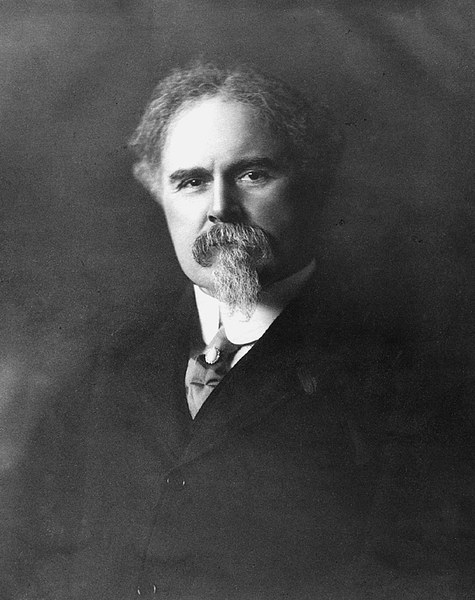
The best-known American of the name is William Alexander MacCorkle, governor of West Virginia from 1893 to 1897. He was born on 7 May 1857 in Rockbridge County, Virginia, studied law at Washington and Lee University, and practised at Charleston, where he was prosecuting attorney of Kanawha County for nine years. He wrote several books, including Recollections of Fifty Years of West Virginia, and died at Charleston on 24 September 1930. Both of his parents were of Scots-Irish descent, and the West Virginia Encyclopedia says he traced the family to the Highland clan of Torquil, as the family tradition did. His own account of the family, as quoted in the table above, says an ancestor left Londonderry about 1690.
The Y-DNA does not support a Highland origin for the McCorkells and McCorkles of Ulster, and I do not know which of the tested lines, if any, belongs with the Rockbridge family. A MacCorkle descendant who took a Y-DNA test would settle it.
The Rev. Samuel Eusebius McCorkle
The most distinguished McCorkle of the colonial generation was the Rev. Samuel Eusebius McCorkle (1746–1811), one of the founders of the University of North Carolina. He was born on 23 August 1746 near Harris’s Ferry, now Harrisburg, in Lancaster County, Pennsylvania, the eldest of ten children of Alexander McCorkle and Agnes (Nancy) Montgomery, who were both born in Ulster. In 1756 the family took the Great Wagon Road south and settled on Back Creek, west of Salisbury in Rowan County, North Carolina. He graduated from the College of New Jersey, now Princeton, in 1772, and became minister of Thyatira Presbyterian church, where in 1794 he founded Zion-Parnassus Academy, among the first schools in the state to train teachers. He proposed a state university in 1784, was an original trustee of the University of North Carolina in 1789, wrote its first by-laws, and taught moral and political philosophy there from 1795 to 1801. He died at Mill Bridge, Rowan County, on 21 January 1811, and is buried at Thyatira.
His family shows how hard the early lines are to separate. His father, Alexander McCorkle of Rowan, born in Ulster, has often been confused with Alexander McCorkle of Rockbridge County, Virginia, the probable forefather of Governor MacCorkle, and the Rev. Samuel with Samuel McCorkle of Augusta County. Both families came out of the same Lancaster County settlements in the 1730s and 1740s, and either Alexander could be the Alexander McCorkle born in 1725 who appears in the DNA study. Rowan and Mecklenburg are neighbouring counties, and the descendants of John McCorkle of Mecklenburg match the Donegal McCorkells, so a Y-DNA test of a male-line descendant of Alexander of Rowan would be well worth having. Alexander McKorkle senior of Rowan appears in the Laws of the State of North Carolina in 1788, and the Rowan family was studied in detail by John Hale Stutesman, whose research papers, about ten volumes, are in the Rowan County Public Library at Salisbury.
How to place your family
Most American lines can be traced back to an emigrant, but few have been tied to an Irish townland. These are the facts that help most:
- The earliest ancestor you can document, with his dates and where he lived.
- Any record of an Irish origin: “Londonderry”, “Donegal” or “Ulster” in a family Bible, will, obituary or county history, and the date it was written.
- The church. Almost all were Presbyterian, and the earliest congregation can narrow the search.
- Whether a man of the line has taken a Y-DNA test, and at which company.
- The names of the emigrant’s children, in order. The first son was usually named after the father’s father and the first daughter after the mother’s mother, which can point to the generation left behind in Ireland.
- Revolutionary War pension declarations, estate settlements and land records. They are the best American sources for the emigrant generation, and they often give ages and birthplaces.
- A healthy suspicion of exact birth dates and towns (“3 August 1734, Dublin”) for anyone born before 1750, unless a record is cited. Most come from copied trees.
Two record losses shape the search. On the American side, the 1890 federal census was almost entirely destroyed. In Ireland, the Public Record Office in Dublin burned in 1922, taking most census returns before 1901 and most wills, among them the will of Robert McCorkle, gentleman, of Colmactraine in Taughboyne, of 1691, now known only from an index entry. Irish records for the eighteenth century are therefore few: church registers where they survive, estate papers, tax and tithe lists, and the 1740 householders’ returns. Most of what survives for the McCorkells is gathered in the Records.
If your McCorkle or MacCorkle family has a documented emigrant ancestor or a Y-DNA result, please write to me. Every connection between an American family and an Irish townland is worth recording, and your letter will be credited. The McCorkle Surname DNA Study at FamilyTreeDNA welcomes male McCorkles, McCorkells, MacCorkles and Mitchells.
Open questions
- Is the Alexander McCorkle (1725–1780) of the DNA study Alexander of Rockbridge County, Virginia, or Alexander of Rowan County, North Carolina, father of the Rev. Samuel Eusebius McCorkle?
- Which Ulster townland did the Mecklenburg and Pennsylvania McCorkles come from?
- Was John McCorkle of Mecklenburg the son of an Archibald, perhaps the Arsbel McCorkell of 1740, or of the Robert McCorkle who married at St Columb’s in 1727?
- Was William McCorkill of Cloughfin, who sold his farm in 1783, the brother of James McCorkle of Montgomery County?
- Who was Samuel Corkle of Paxtang in 1737, and is he the Samuel McCorkle of Augusta County?
- Who were John McCorkle of Austintown’s family in Ireland, and who was the brother who followed him to America?
- Did Archibald McCorkill of Cooley, Moville, recorded in 1792 and not after, go to America?
Acknowledgement
Much of what is known about the early American McCorkles was gathered by Dave Woody, whose McCorkle Family Roots website, begun in 1996, is the most careful account of the family in America, with every source cited. I first wrote to him in 2009, when I was starting out, and his encouragement and generous correspondence over the following years were an inspiration for this site.
Sources
- Dave Woody, McCorkle Family Roots (dave-woody.com/mccorkle), especially “James and William McCorkle of Ulster and Montgomery Co., Virginia”, citing Chalkley, Chronicles of the Scotch-Irish Settlement in Virginia (1912), Kegley, Early Adventurers on Western Waters (1980), and Montgomery Co. and Green Co., Kentucky, marriage records.
- Letter of James Hamilton, Strabane, to the Earl of Abercorn, 11 May 1783, PRONI D623/A/44/237.
- Louis W. McCorkle, From Viking Glory.
- W. A. Leslie (ed.), A Great Archbishop: King Correspondence, Derry Clergy (1908), as quoted in T. H. Mullan, Derry, Londonderry (1986); Alexander G. Lecky, In the Days of the Laggan Presbytery (1908), p. 147.
- Karen J. Cullen, Famine in Scotland: the ‘Ill Years’ of the 1690s (2010).
- Charles Everett Cartwright Oswald, “The Descendants of John McCorkle” (unpublished manuscript, 1904–05, transcribed 1927); Find a Grave memorial 75807846, Isabella McCorkle.
- Piney Creek family traditions and descendants’ accounts supplied by correspondents.
- Burt kirk session book, 1676–1715, transcribed by Clan Ewing (1995).
- McCorkle Surname DNA Study and Little Scottish Cluster project, FamilyTreeDNA.
- “William Alexander MacCorkle”, e-WV: The West Virginia Encyclopedia (wvencyclopedia.org/entries/1418).
- “Samuel Eusebius McCorkle”, Wikipedia, and the biography in William S. Powell (ed.), Dictionary of North Carolina Biography (Documenting the American South, docsouth.unc.edu).
- Passenger arrivals at the Port of Philadelphia, 1800–1819.
- Daniel W. Patterson, The True Image: Gravestone Art and the Culture of Scotch Irish Settlers in the Pennsylvania and Carolina Backcountry (University of North Carolina Press, 2012).
- Mecklenburg Co., North Carolina, estate and land records, and the pension declaration of Archibald McCorkle (1834), as reported by descendants; John Hale Stutesman papers, Rowan County Public Library.
- FamilyTreeDNA, McCorkle Surname DNA Study, 67-marker results (2013).
- Family transcripts and descendants’ trees supplied by correspondents.